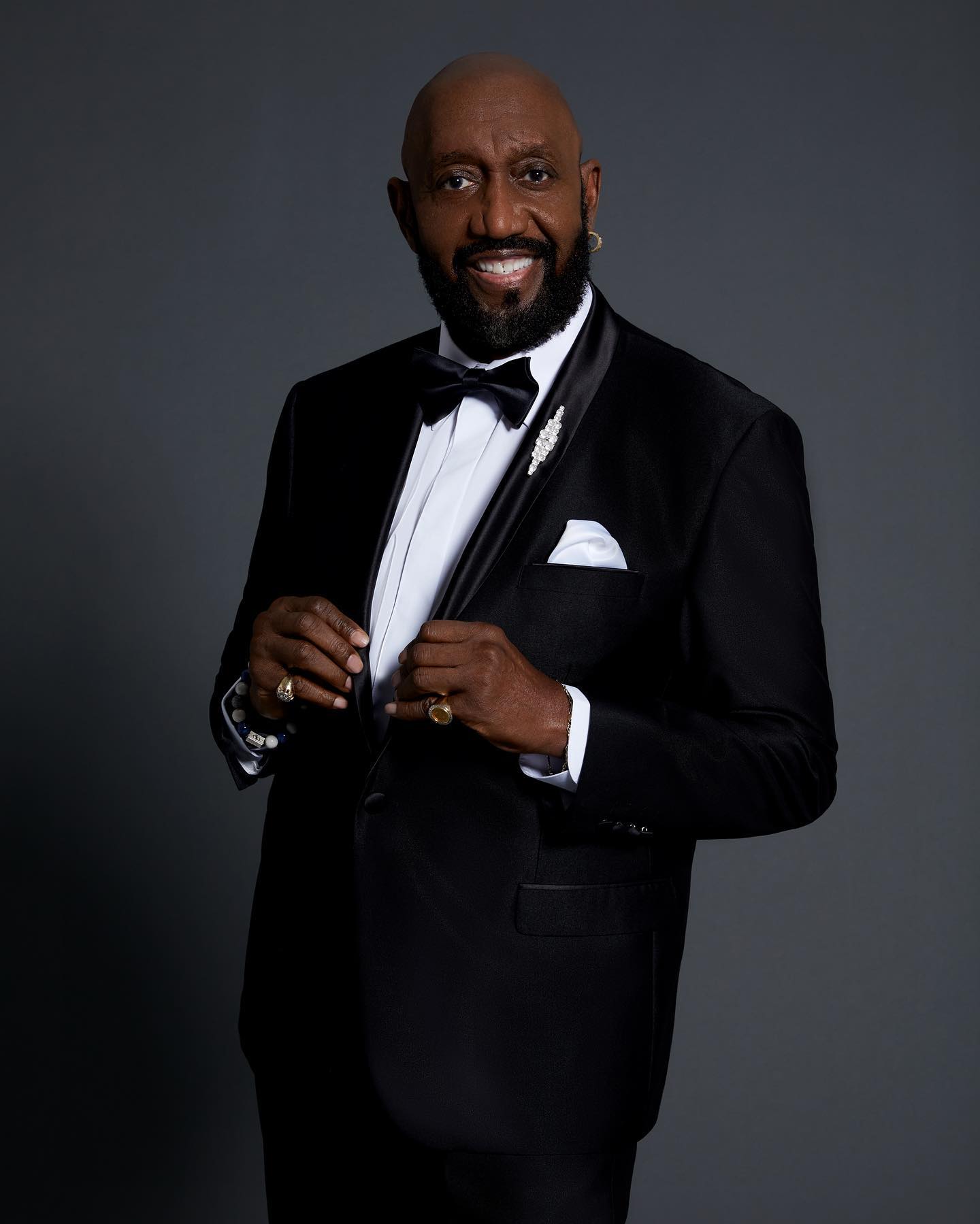
Otis C. Williams
OTIS CLAYBORN WILLIAMS, founding member of the world-renowned, Grammy Award-winning group, The Temptations, is a music legend. From award-winning singer, songwriter to critically acclaimed author, from television producer, and Broadway executive producer to executive producer of the group’s albums, Williams defied all odds, having gone from the dirt roads of rural Texas to the highest heights of Detroit, Motown, and beyond.
One of the world’s most significant and prolific musical institutions of all time, The Temptations are entertainment giants revered for their enduring catalog of music masterpieces. As the solesurviving member of the original Temptations, Williams, now 83, is uniquely one of Detroit’s and America’s national treasures.
Williams has been and still is the chief architect of The Temptations’ evolution throughout the 20th and 21st centuries. Celebrating 60+ years at the forefront of The Temptations, and still performing around the world today, he is a global superstar.
Dr. Otis Williams received an honorary degree, Doctorate of Humane Letters, from Stillman College, a historically Black college and university in Tuscaloosa, Alabama in 2006.
Williams’ personal journey has been documented in his critically acclaimed 1988 autobiography, Temptations, which became the source for both the Emmy® Award-winning television mini-series, Temptations, released in 1998, and most recently the smash hit Broadway musical, Ain’t Too Proud: The Life and Times of The Temptations, which won the 2019 Tony® Award for Best Choreography. Ain’t Too Proud broke house records while on Broadway.
The unique contributions Otis Williams and The Temptations have made to the legacies of Detroit, Motown, The Motown Museum, American Culture and Black communities everywhere, as well as to the global music landscape are undeniable.
Williams said, “In everyone’s life, there are certain key people and events—linchpin friends and incidents without which there’d be an entirely different story to tell. My life has been blessed with many such people and events, and not a small amount of good fortune. But at the heart of my story, of The Temptations’ story, is the place where it all started, the place I will always go back to: Detroit.”
With great affection, Williams often says today, “Detroit was always known for the Big Three: Ford, Chrysler, and GM. However, once Motown, one of the greatest record labels of all time, arrived in the city, it became known for the Big Four: Ford, Chrysler, GM, and Motown.” Williams added, “Looking back, I never could have imagined where my life has taken me. I’m proud of what The Temptations have achieved, and I’m grateful for every opportunity we’vebeen so fortunate to receive. The music carries me…”
Born October 30, 1941, in Texarkana, Texas, Williams’ worldview was formed in the homes of his paternal grandmother, Della Gooden and his maternal grandparents Lucinda Eliga and Frank Fisher. The Black Baptist church was at the center of his childhood. His grandparents lived in a segregated community, and he attended an all-black school and an all-black church. Going to church and singing in the gospel choir on Sundays, were beloved rituals during hisformative years. He was deeply loved and spoiled as any child brought up by two strict, Godfearing grandmothers could be.
Like many Black families who migrated north in the 50’s, so too did Williams’ mother, Hazel Louise Williams. She found work and a new home among the thriving, working-class black community in Detroit, Michigan. When Otis was eleven years old, he left Texas to join his mother and stepfather, Edgar Little, who worked on the assembly line at Ford Motor Company in Detroit. After arriving in the famous Motor City, it wasn’t long before young Williams set his sights on forming a singing group. Influenced by gospel singers such as the Dixie Hummingbirds, the Swan Silvertones, and others during his early childhood with his grandmothers, Otis did his share of singing in the halls of Hutchins Junior High in Detroit. As a teenager, he was often heard harmonizing with classmate Lamont Dozier of Holland-Dozier-Holland fame in the hallways between classes. Young Williams’ interest in music blossomed when he heard early R&B greats such as Ruth Brown, B.B. King, Nat “King” Cole, and Billy Eckstine on the black radio stations in Detroit. Unlike life in rural Texas, Detroit was a bustling city, filled with bright lights, cars, music, and a strong vibrant Black community.
Once in high school, Williams started attending rock- ‘n’-roll shows at the famous Fox Theater featuring acts like Chuck Berry, Frankie Lymon and the Teenagers and the Cadillacs. Mesmerized by the performers and the roar of live audiences, Otis decided to put his own group together. He pulled together other teenagers from his neighborhood, including Melvin Franklin who attended Northwestern High, the same high school as Otis. With Rock- ‘n’-Roll mania sweeping his generation, Otis formed his first group called Otis Williams and The Siberians, then a group called the El Domingos, and eventually the group, Otis Williams and the Distants. The group consisted of: Otis Williams, Al Bryant, James Crawford, Melvin Franklin, and Richard Street. They released “Come On” in 1959, a song written by Williams. It was while Otis and the group were performing “Come On,” at St. Stephen’s Community Center in Detroit in 1960, that they caught the attention of Berry Gordy. When Otis came off the stage and headed to the bathroom, he encountered Berry Gordy. Impressed with the performance, Berry told Otis if they ever decide to make a change, they should come see him because he was starting his own label.
As fate would have it, after an initial call to Mr. Gordy, Otis got an audition at Motown with writer and producer William “Mickey” Stevenson in 1961. By then William’s group had picked up new members, Eddie Kendricks and Paul Williams and called themselves The Elgins. Impressed with their sound, Stevenson called in Gordy who after hearing the group offered them their first contract on the spot. According to Williams, a few days before signing, they became known as The Temptations. The lineup of the original Temptations included: Otis Williams, Melvin Franklin, Paul Williams, Eddie Kendricks, and Elbridge “Al” Bryant. From the start, Williams said he served as management liaison, Melvin as treasurer, Paul planned the shows and the choreography, Al arranged the transportation and Eddie handled the wardrobe.
In the beginning, besides doing their regular shows, The Temptations did a lot of background singing for other Motown artists. They made their debut at the famed Apollo Theater in Harlem in the early 60s as background singers for Mary Wells, Motown’s leading star at that time. Hoping for a big hit of their own, the group started to tour outside of Michigan. They did shows in cities such as Cleveland, Ohio with acts like Gladys Knight and the Pips, the Halos, and others. Their song, “Dream Come True,” made a minor splash on the R&B chart at #22. In early 1963, The Temptations cut their sixth single, “I Want a Love I Can See” which was their first time working with the two writer-producers who would create the bulk of their greatest hits through the 1960s and 70s: Smokey Robinson and Norman Whitfield.
By December 1963, Al Bryant had left the group, and in 1964, Otis Williams invited David Ruffin, a long-time friend from his neighborhood in Detroit, to join the group. They lived one block from each other, Williams on Philadelphia Street and Ruffin on Euclid Avenue. The group became known as the legendary “Classic Five” –Otis Williams, Melvin Franklin, Eddie Kendricks, Paul Williams, and David Ruffin. The Classic Five broke out with “The Way You Do the Things You Do” which peaked at #11 on the national pop chart in 1964. The history of the legendary “Classic Five” is woven into the fabric of Detroit. Their rise to international fame is deeply rooted in Detroit’s and Motown’s own rich histories and cultures.
What began in Detroit at Motown, when this remarkable combination of soulful voices united, was the genesis of an epic journey that introduced multiple superstars to the world and produced some of the greatest music in the modern era. The Temptations’ versatile voices, synchronized dance steps, handsome style, and dazzling dress, set a new standard that became world famous and is still the group’s distinguished trademark today.
Taken under the wing of Berry Gordy, his executive team, writers and producers, Otis Williams, and his fellow Temptations, like the other famous Motown recording artists were required to participate in Motown’s Artist Development. Amid segregation, civil rights’ struggles, Vietnam protests, the women’s rights movement and all the upheaval of the 60s, The Temptations began touring the country by bus with Motown’s famous Motortown Revue. Generally, a bus carried five or six acts plus the band and Motown chaperones. By this time, the Motown artist roster was extraordinary, with artists such as The Temptations, The Supremes, Marvin Gaye, Smokey Robinson & The Miracles, Mary Wells, Gladys Knight & The Pips, and others. They all developed a camaraderie, and on and off the road used their voices to bring people together.
Christmas Day in 1964, The Temptations were doing a Motortown Revue show at the Brooklyn Fox Theater with the Supremes, the Marvellettes, Marvin Gaye, the Miracles, and Stevie Wonder. The next day Motown released “My Girl.” It charted at #76 three weeks later. It was 1965, when “My Girl” became a #1 Pop chart hit, that was a game changer for Williams and The Temptations. The Temptations were performing at the Apollo Theater in Harlem when they received a telegram from Berry Gordy, The Supremes, The Beatles, and many others, congratulating them on their #1 success. The Temptations’ fan base went global and like The Beatles, they became a household name worldwide. This was a mic drop moment in Williams’ iconic career. It was The Temptations’ first #1 million copy chart hit. “My Girl” would become the group’s magnum opus, and it was inducted into The Grammy Hall of Fame in 1998, and in 2018 it was entered into the National Recording Registry by the Library of Congress. “My Girl” has now become a standard. In fall of 2023, “My Girl” was ranked #3 among Billboard’s 500 Best Pop Songs of all time.
With “My Girl” having opened the door to global attention, the group continued to produce a string of hits that topped the charts in the decades to follow. The crowds and venues became bigger and more diverse. This was the dawn of Motown’s golden era, and The Temptations were at the center of it all.
When their longtime manager, Shelly Berger began managing both The Temptations and The Supremes in 1966, The Temptations made countless appearances on TV programs including The Ed Sullivan Show, The Hollywood Palace, The Dean Martin Show, Shindig, Hullabaloo, The Tonight Show, Where the Action is and The Smothers Brothers Comedy Hour. The group Also became a smash hit at the Copacabana nightclub in New York City, one of many major appearances negotiated by Mr. Berger that symbolized acceptance by the entertainment world at large. The Temptations were now show business titans.
By 1967, the Classic Five released their first live album, Temptations Live, which is also the only live album ever recorded featuring David Ruffin. It was recorded at the famous Rooster Tail Club in Detroit on October 3, 1966. The album reached #10 on the Pop chart and was on Billboard’s Top 200 list for almost an entire year.
After David Ruffin’s departure, Dennis Edwards joined the group in 1968. In 1968, and 1969, respectively, Diana Ross and the Supremes and The Temptations starred in primetime network television specials “TCB (Taking Care of Business)” and “G.I.T. (Getting It Together) on Broadway.” Never had two contemporary African American groups headlined their own #1 nationally rated television specials, all produced by Motown, an African American owned company. The “TCB” special was named the #1 rated variety show in 1968 and received an Emmy® nomination. The original cast soundtrack album, TCB, reached #1 on Billboard’s Top 200 Albums chart. At the time, this was an unparalleled accomplishment for African American entertainers. The Temptations helped change the face of primetime television and fueled the growth in the performing arts and entertainment world for African Americans artists forever. Considered trailblazers, The Temptations opened doors for many artists who followed in their footsteps, reaching mainstream audiences here and abroad.
Otis Williams’ dream of performing in front of live audiences, was realized when he was but a teenager. However, he never imagined that The Temptations’ songs and performances would take him around the world performing for Presidents, and Heads of State, and fans everywhere, and that their songs would continue to be passed between generations, more than 60 years later. The Temptations’ music, then and now, continues to raise the spirit of the country and uplift a nation searching for common bonds and glimmers of hope and humanity.
In January 2025, The Temptations are kicking off a national concert tour. Otis Williams and The Temptations are still lighting up concert stages around the world. The Temptations’ presence in the world today has never been more vivid, and their popularity is ever-increasing. Williams’ remarkable achievements, and the longevity of his distinguished musical career, make him unlike any other musical artist in American culture in the modern era.